Research
Rocks and minerals can record several processes at once: growth, mixing, diffusion, fragmentation, and later modification. I investigate how that heterogeneity develops and when it challenges the assumptions used to reconstruct magmatic histories. My projects connect experiments and microanalysis with field observations and numerical models.
Magma dynamics and heterogeneity
Research overview ↑What does heterogeneity reveal about magma storage, exchange, and eruption?
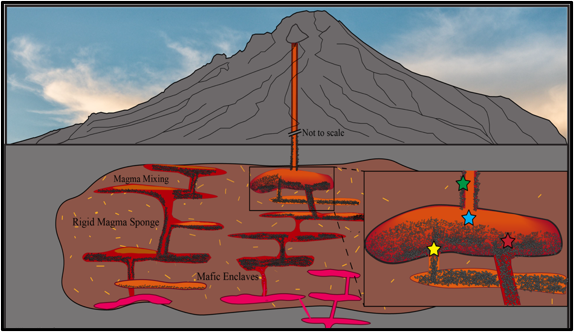
Magma Storage Beneath Mt. Hood
How can warm and cold storage histories coexist in one magma reservoir?
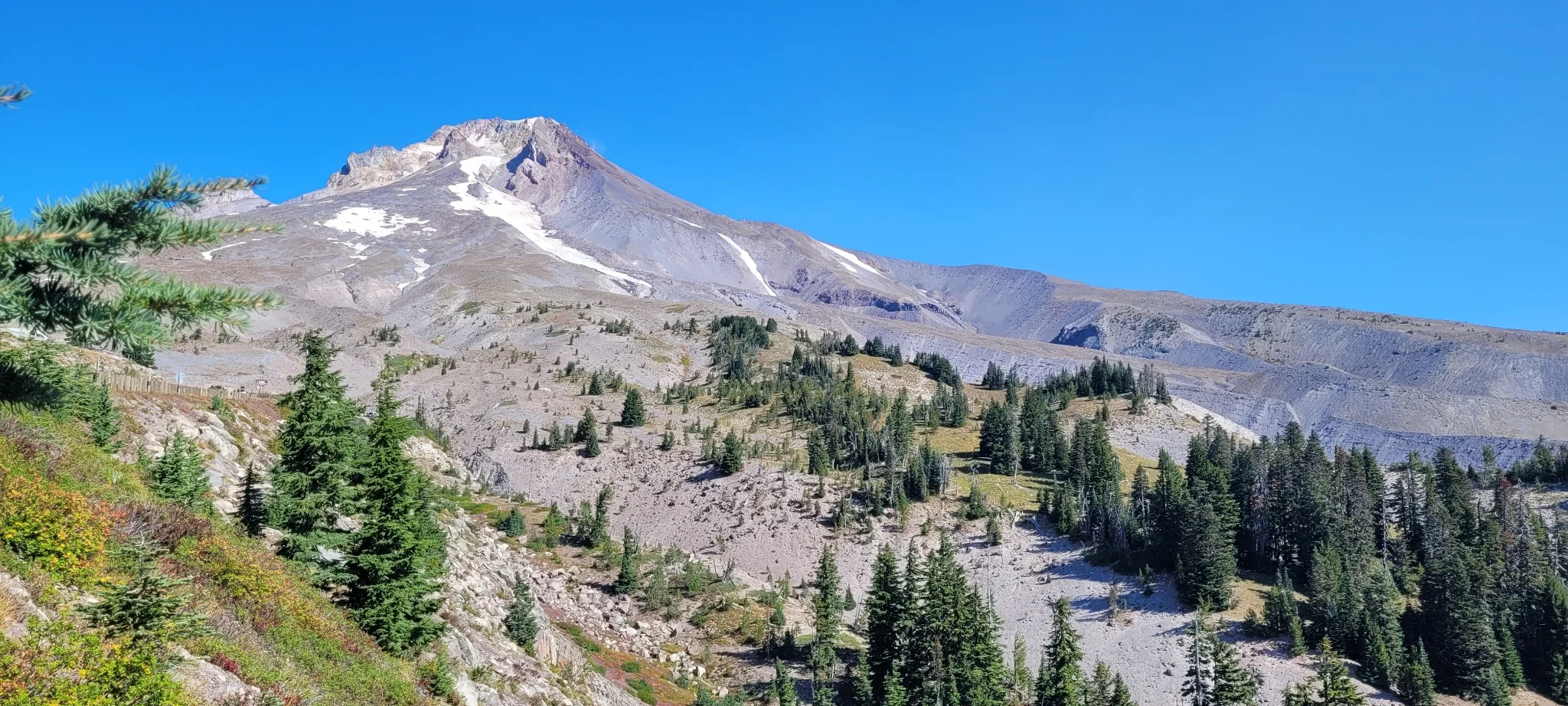
Sr–Mg diffusion modelling, U–Th disequilibria dating, and Ti-in-zircon thermometry reveal contrasting thermal histories beneath Mt. Hood. These records support simultaneous warm and cold storage, showing why a single temperature–time history can miss the reservoir’s internal variability.
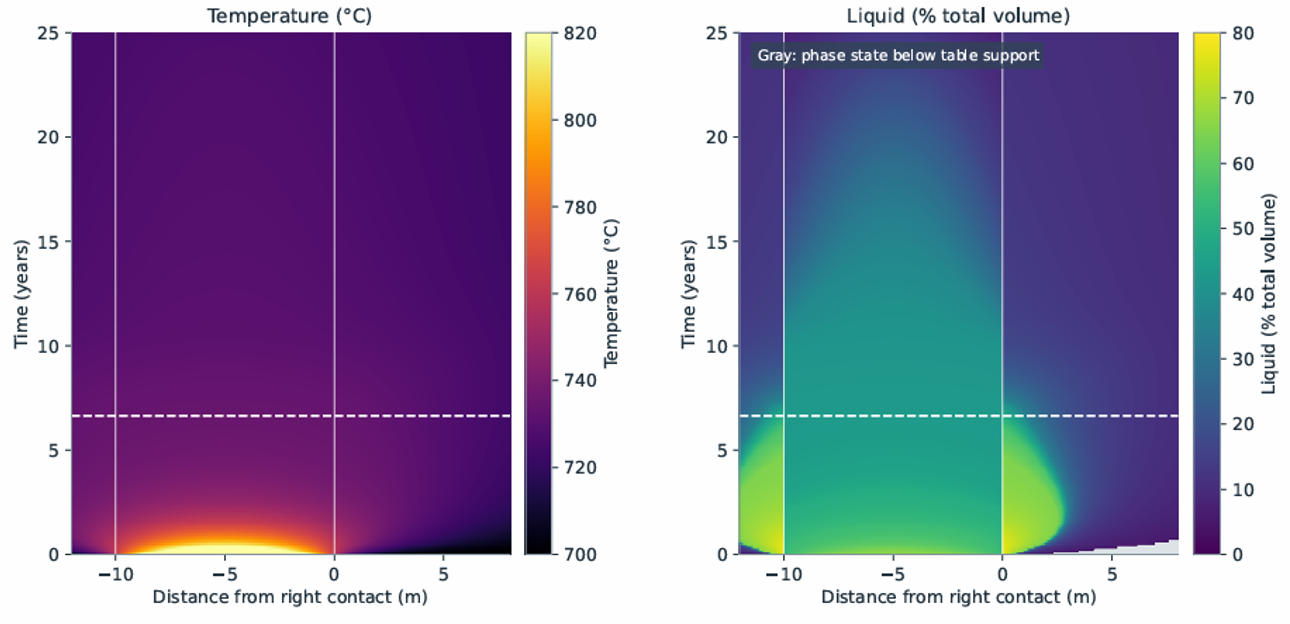
Thermal–Chemical Diffusion at Pyramid Peak
What controls how long neighbouring magmas exchange elements and isotopes?
At Pyramid Peak, calcium-isotope gradients across an intrusive contact record chemical exchange during cooling. I combine measured profiles, field relationships, and thermal–chemical modelling to connect those gradients with the duration of diffusion and the evolving physical state of the intrusion.
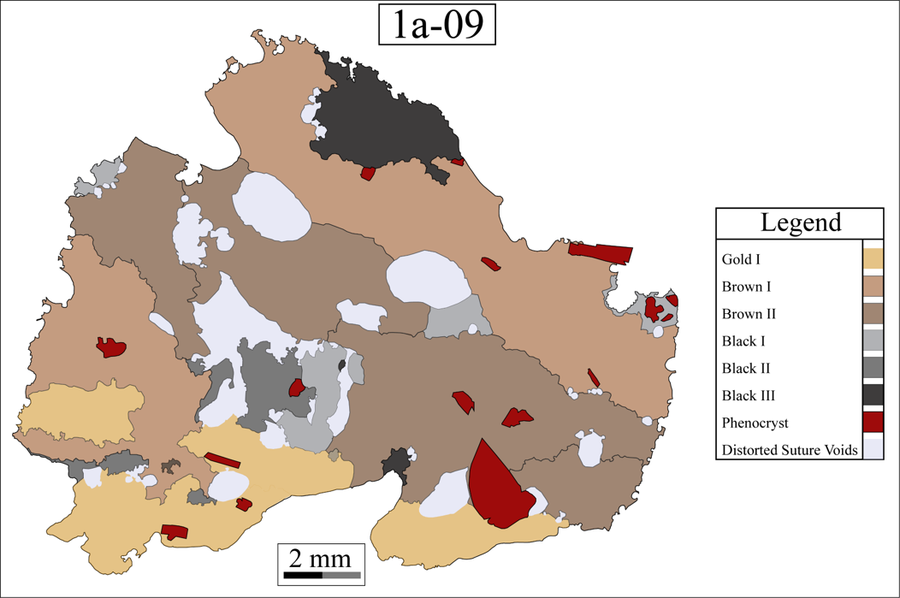
Fragmentation and Scoria Formation at Tecolote
How does basaltic magma fragment during highly explosive eruptions?
Scoria from Tecolote preserves contrasting textures within individual clasts. I use these juxtaposed domains to investigate the contributions of brittle and ductile fragmentation, and how particles are assembled into the erupted products.
Crystal growth and rock behaviour
Research overview ↑How does crystal growth influence mineral chemistry and the physical behaviour of rocks?
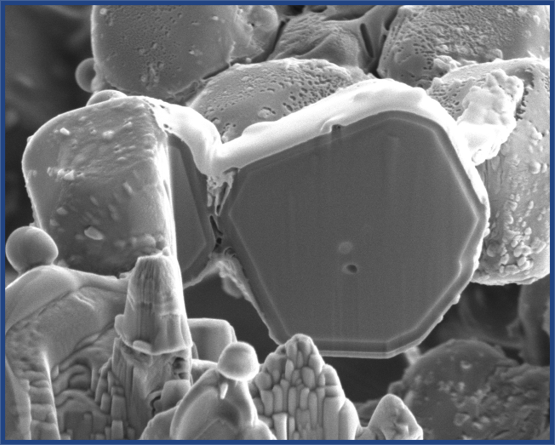
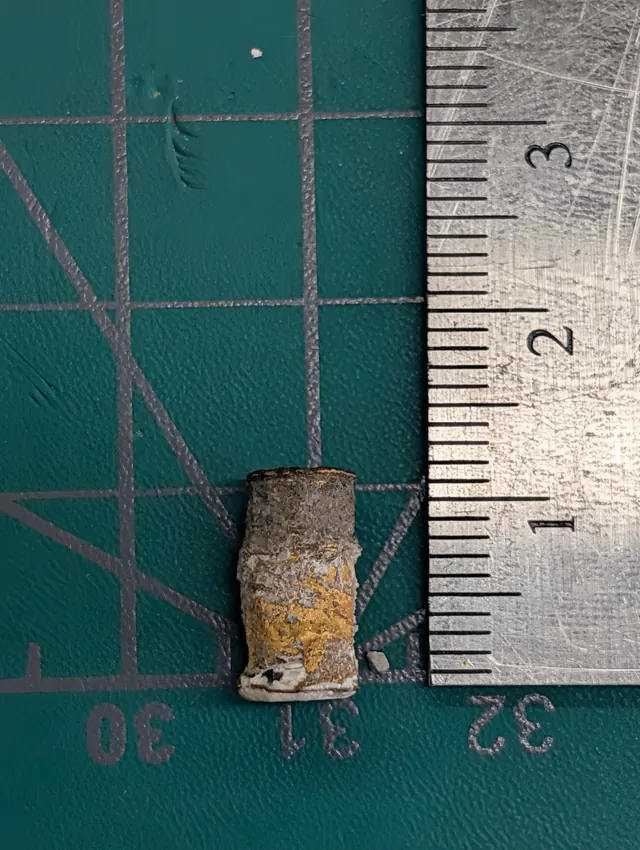
Quartz Growth and Titanium Uptake (TitaniQ)
Can quartz inherit its chemistry before it becomes a crystal?
Time-series experiments point to a possible role for amorphous precursors in titanium uptake. I combine experiments and electron microscopy to test this growth pathway and assess when Ti-in-quartz thermobarometry reliably records crystallization conditions.
Quartz Growth, Fault Healing, and Tremor
How does quartz growth contribute to fault healing?
Experiments investigate how growing quartz develops connections and cohesion between grains. I am examining how that progressive change in material behaviour relates to fault healing and tremor, linking mineral growth at small scales to the mechanical behaviour of rocks.
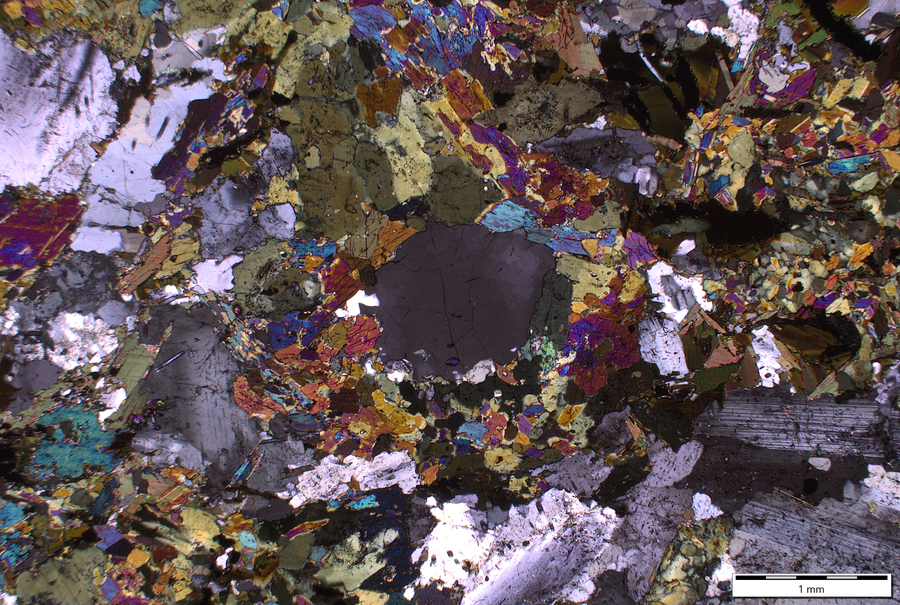
Ocellar Quartz and Magma Plumbing
What processes produce ocellar quartz textures?
I investigate these textures using petrography and field relationships. Connecting individual grains and their surroundings to the wider intrusion helps test how crystal growth and interactions between magmas shape the mineral textures preserved in the rock.
Preservation of geochemical records
Research overview ↑Which signals preserve original conditions, and which reflect later modification?
Early Lunar Magmas and Impact Modification
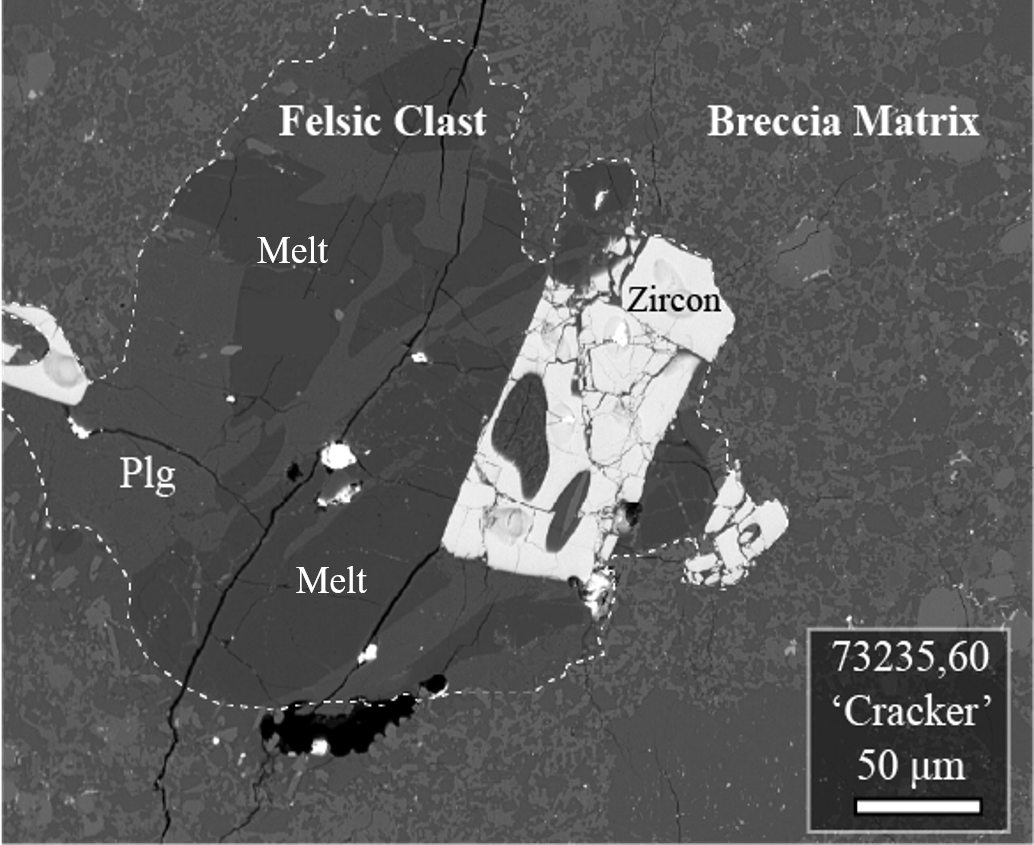
How pristine are “pristine” lunar samples?
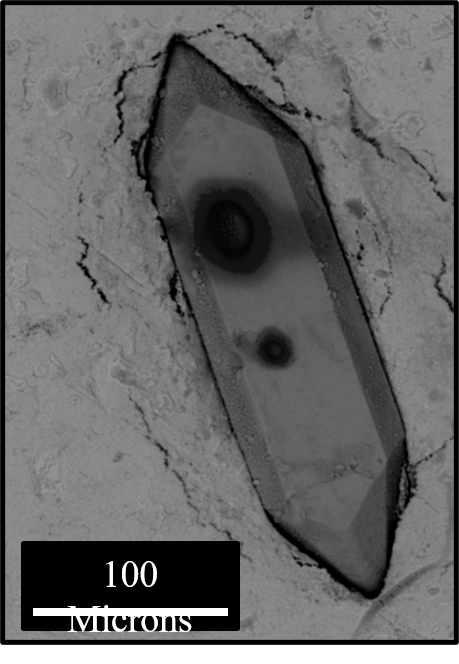
Al-in-zircon systematics reveal disequilibrium between zircons and their surrounding glass in lunar breccias. This work identifies impact modification in samples previously treated as pristine and tests which parts of the mineral record can still constrain early lunar magmas.
Read publicationCryptotephra in the Archaeological Record
When can a tiny glass shard reliably identify its volcanic source?
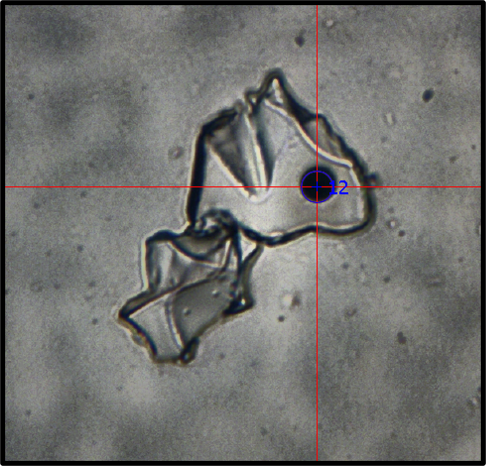
I develop trace-element methods for sourcing cryptotephra in archaeological deposits and investigate how heating by archaeological fires can modify volcanic glass. The aim is to distinguish source signatures from later alteration when correlating eruptions with the archaeological record.
Approaches
Research overview ↑Experimental petrology
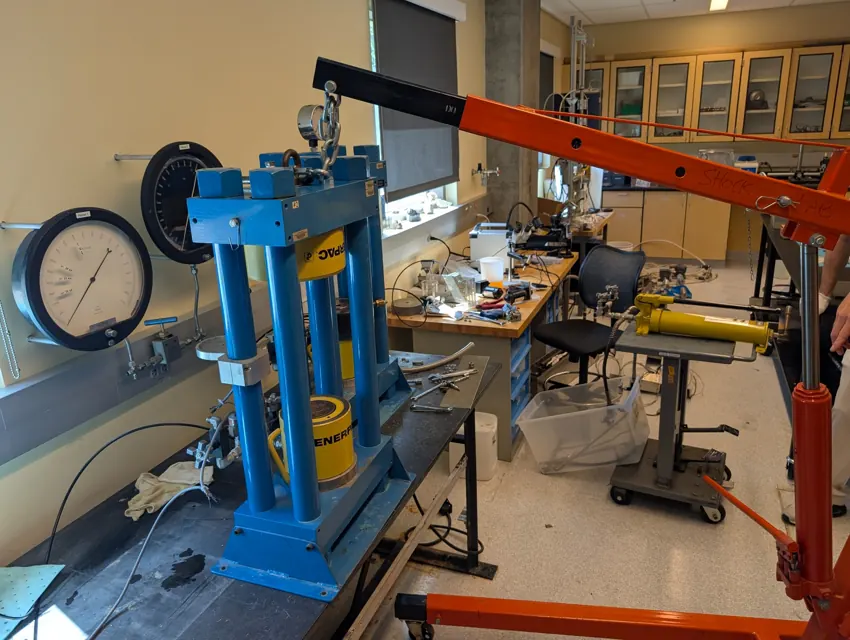
Reproduce mineral growth under controlled pressure, temperature, and time.
- Cold-seal pressure vessels
- Piston-cylinder apparatus
Microanalysis and imaging
Resolve textures, structures, and relationships between mineral phases.
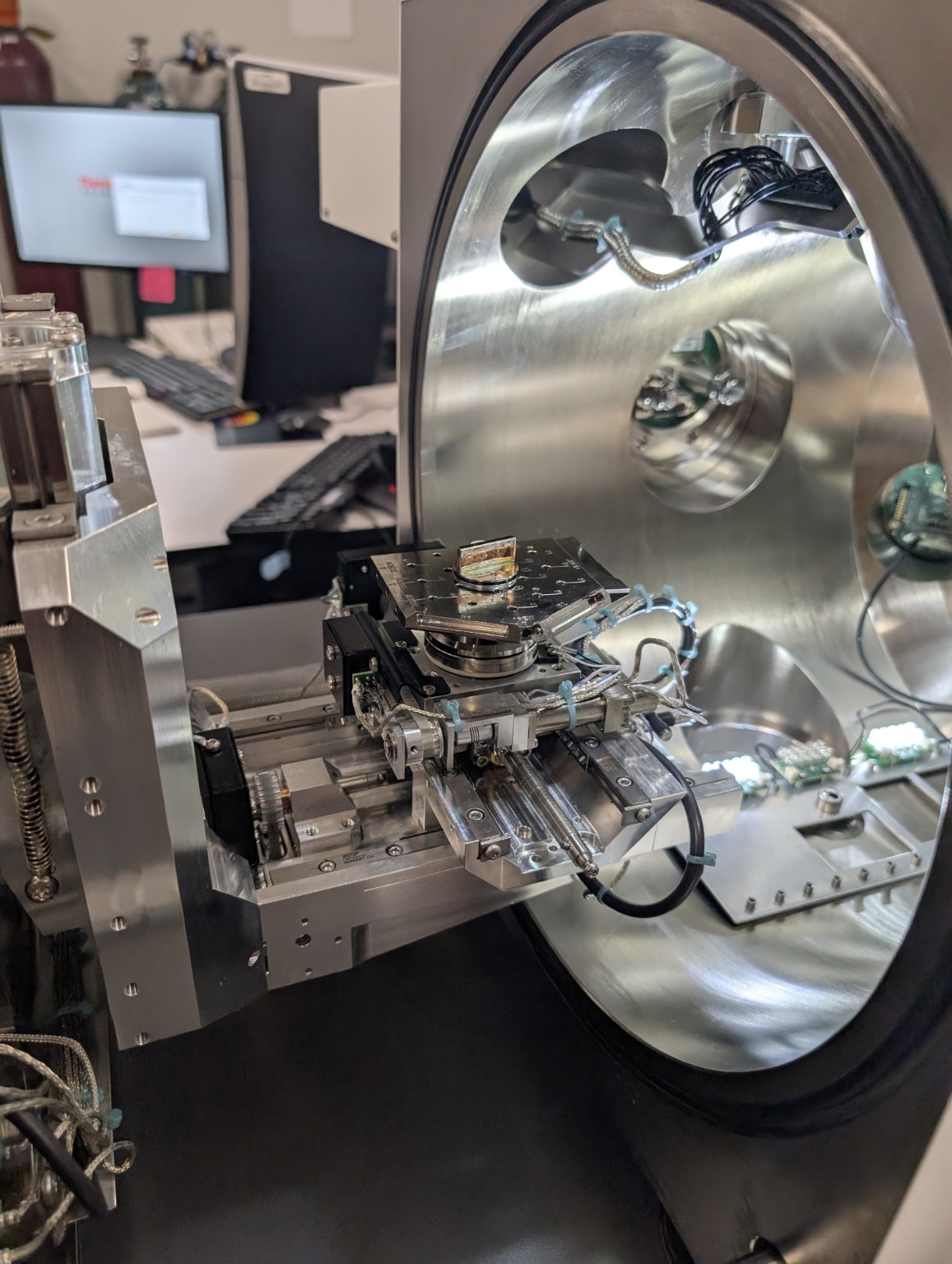
- SEM
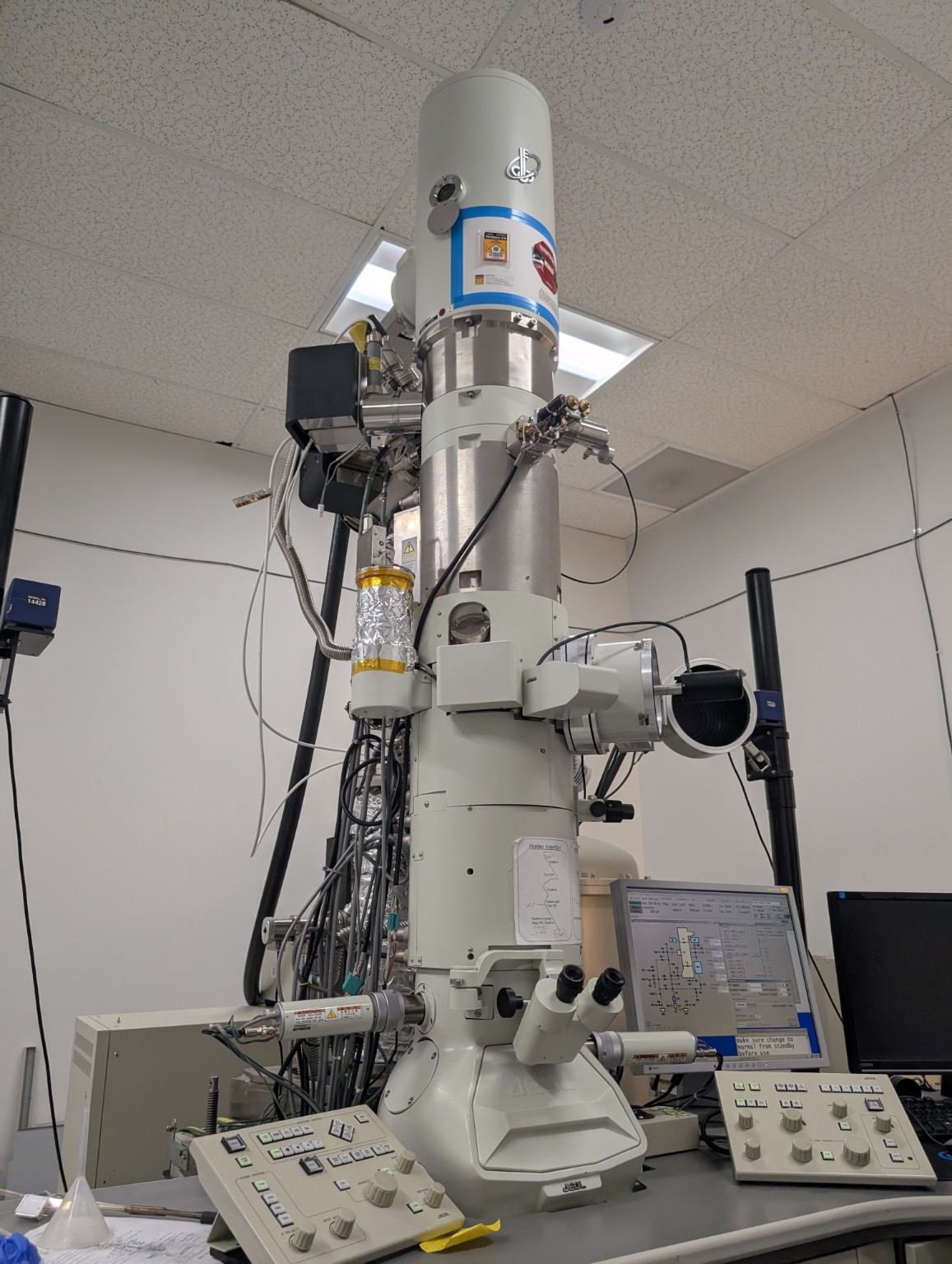
- TEM
- FIB
- EBSD
- Electron microprobe — EDS and WDS
- Petrographic microscopy
- Profilometry
Geochemical analysis
Measure mineral and glass chemistry and test geochemical records.
- LA-ICP-QQQ-MS
- SIMS
- FTIR and ATR-FTIR
- Raman spectroscopy
Modelling and quantitative analysis
Connect measurements to timescales and evolving physical conditions.
- Diffusion chronometry
- Thermal–chemical modelling
- Image analysis
- Python